
09 May, 2026
The Pillars of Prayer, also known as the pillars of salah, are the essential actions and conditions that must be fulfilled for a Muslim prayer to be valid in Islam. Salah is one of the Five Pillars of Islam and holds great importance in the daily life of every Muslim. Without completing these pillars correctly, the prayer becomes incomplete or invalid.
The pillars of salah are acts that cannot be skipped intentionally or accidentally. They form the foundation of Islamic prayer and ensure that worship is performed properly according to the teachings of the Quran and Prophet Muhammad.
Understanding the pillars of prayer helps Muslims improve their worship, strengthen their connection with Allah, and perform salah with sincerity and correctness.
Prayer is the second pillar of Islam after the declaration of faith. Muslims perform five daily prayers as a direct form of worship and communication with Allah.
Salah teaches discipline, patience, humility, and spiritual awareness. It also reminds believers to remain connected to their faith throughout the day.
Because prayer is such an important act of worship, Islam clearly explains how it should be performed, including its pillars, obligations, and recommended acts.
Many people confuse the pillars of salah with obligatory or recommended actions. However, there are important differences.
Pillars of Salah
The pillars are essential acts that must be performed. Missing one invalidates the prayer unless corrected.
Obligatory Acts
Obligatory acts are required, but forgetting them may be corrected through Sujood As-Sahw, also known as the prostration of forgetfulness.
Sunnah Acts
These are recommended actions practiced by the Prophet Muhammad. Leaving them does not invalidate the prayer, but performing them increases rewards.
Islamic scholars mention several pillars of prayer based on authentic Islamic teachings. While minor differences may exist among schools of thought, the following pillars are widely accepted.
1. Standing During Prayer If Able
Standing is one of the primary pillars of salah in obligatory prayers for those physically capable.
Muslims stand facing the Qiblah while reciting Quranic verses and supplications. If someone is unable to stand due to illness or disability, Islam allows praying while sitting or lying down.
2. Opening Takbir (Takbirat al-Ihram)
The prayer officially begins by saying “Allahu Akbar,” meaning “Allah is the Greatest.”
This opening takbir marks the transition from ordinary actions into the sacred act of worship. Without it, the prayer does not begin correctly.
3. Recitation of Surah Al-Fatihah
Reciting Surah Al-Fatihah in every unit of prayer is one of the most important pillars of prayer.
This chapter of the Quran is known as the opening chapter and contains praise, worship, and guidance. Prophet Muhammad emphasized its importance in every rak’ah of salah.
4. Bowing (Ruku)
Ruku is the act of bowing with humility before Allah. During this position, Muslims place their hands on their knees and glorify Allah.
Bowing symbolizes submission, respect, and obedience to the Creator.
5. Rising from Bowing
After completing Ruku, the worshipper must stand upright again before moving to prostration.
This movement is a separate pillar and should be performed calmly and properly.
6. Prostration (Sujood)
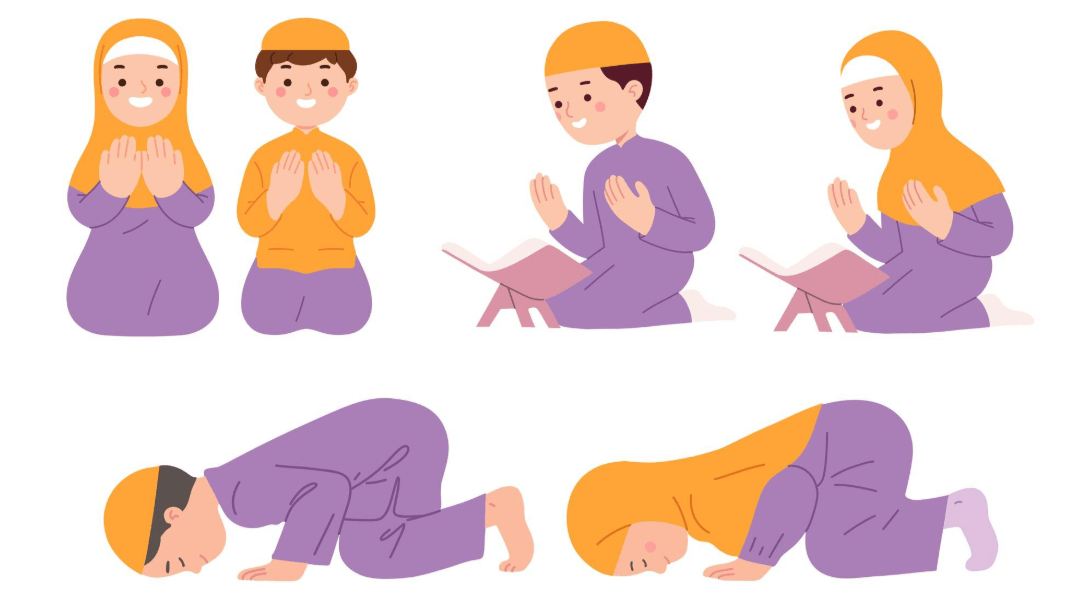
Sujood is considered one of the most spiritually powerful moments in salah. Muslims place their forehead, nose, palms, knees, and toes on the ground while glorifying Allah.
Prostration represents complete humility and closeness to Allah.
7. Sitting Between the Two Prostrations
After the first prostration, Muslims briefly sit before performing the second Sujood.
This sitting position is an essential pillar and should not be skipped.
8. Calmness and Tranquility in Every Position
Prayer should not be rushed. Each pillar must be performed with calmness and stability.
Prophet Muhammad instructed Muslims to pray with proper tranquility so that every movement is completed correctly.
9. Final Tashahhud
The final sitting of prayer includes the recitation of Tashahhud, where Muslims testify to the oneness of Allah and send blessings upon Prophet Muhammad.
This part is an important pillar in the completion of salah.
10. Sitting for the Final Tashahhud
Remaining seated while reciting the final Tashahhud is also one of the pillars of salah.
It marks the concluding stage of the prayer before ending with Tasleem.
11. Tasleem (Ending the Prayer)
The prayer ends by turning the head and saying “Assalamu Alaikum wa Rahmatullah.”
Tasleem officially concludes the salah and exits the worshipper from the state of prayer.
12. Performing the Pillars in Correct Order
The pillars of prayer must be performed in the correct sequence taught by Prophet Muhammad.
Changing the order intentionally may invalidate the prayer.
Understanding the pillars of salah is essential for every Muslim because prayer is accepted only when its requirements are fulfilled correctly.
Learning these pillars helps Muslims:
- Avoid mistakes in prayer
- Improve concentration during worship
- Strengthen their spiritual connection with Allah
- Follow the Sunnah of Prophet Muhammad accurately
- Teach others the correct method of prayer
Common Mistakes in Prayer
Some common mistakes related to the pillars of prayer include:
- Rushing through Ruku and Sujood
- Forgetting Surah Al-Fatihah
- Skipping calmness between movements
- Incorrect posture during prayer
- Ending prayer improperly
Studying the correct method of salah helps prevent these mistakes and improves the quality of worship.
Prayer is not only physical worship; it also provides emotional and spiritual benefits.
Correct salah helps Muslims achieve inner peace, discipline, patience, and mindfulness. It strengthens faith and reminds believers of their purpose in life.
Regular prayer also encourages good character and helps Muslims stay away from harmful behavior.
How Children Can Learn the Pillars of Prayer
Teaching children the pillars of salah from an early age helps them build strong Islamic habits.
Parents and teachers often use step-by-step practice, repetition, and simple explanations to help children understand the importance of prayer.
Learning through example is one of the most effective ways to teach salah correctly.
What are the pillars of prayer in Islam?
The pillars of prayer are the essential actions required for salah to be valid, such as standing, reciting Al-Fatihah, bowing, prostrating, and ending with Tasleem.
How many pillars of salah are there?
Islamic scholars mention multiple pillars, with slight differences between schools of thought. The commonly accepted pillars include standing, Takbir, recitation, Ruku, Sujood, Tashahhud, and Tasleem.
Is Surah Al-Fatihah required in every rak’ah?
Yes. Reciting Surah Al-Fatihah in every unit of prayer is considered one of the main pillars of salah.
What happens if a pillar of prayer is missed?
Missing a pillar intentionally or accidentally may invalidate the prayer unless corrected properly.
Why is tranquility important in salah?
Calmness ensures that every pillar is performed correctly and helps improve concentration and humility during worship.
Can a sick person pray while sitting?
Yes. Islam allows Muslims who cannot stand due to illness or disability to pray while sitting or lying down according to their ability.
