
08 March, 2026
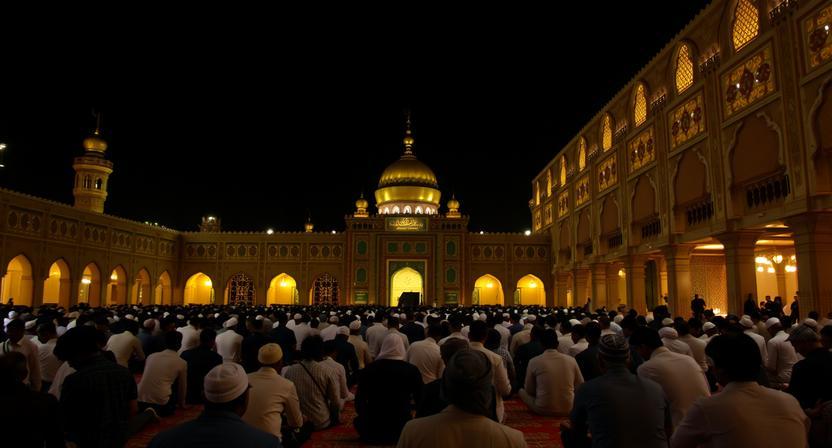
During the final days of the holy month, many Muslims dedicate themselves to itikaf ramadan, a spiritual retreat focused entirely on worship and reflection. This practice allows believers to disconnect from worldly distractions and concentrate on prayer, Quran recitation, and remembrance of Allah. Because it often occurs during the last ten nights, itikaf ramadan also helps Muslims seek the blessings of Laylat al-Qadr. Understanding the meaning, rules, and purpose of itikaf ramadan allows believers to benefit fully from this powerful spiritual tradition.
Many Muslims search for what is Itikaf in Ramadan, especially when preparing for the last days of the holy month.
The term Itikaf refers to staying in the mosque with the intention of devoting time exclusively to worship.
The concept of itikaf ramadan involves:
• Remaining in a mosque for a specific period
• Focusing on prayer, Quran recitation, and supplication
• Avoiding unnecessary worldly activities
Understanding what is Itikaf in Ramadan highlights its purpose as a time of deep spiritual reflection.
The Prophet Muhammad ﷺ practiced itikaf ramadan regularly during the final ten nights, encouraging Muslims to seek closeness to Allah during this blessed period.
A common question during Ramadan is when does Itikaf start.
Traditionally, itikaf ramadan begins before sunset on the 20th day of Ramadan and continues until the end of the month.
Typical Itikaf Schedule
-
Start before Maghrib on the 20th day of Ramadan
-
Remain in the mosque throughout the final nights
-
End when the moon of Eid is sighted
Understanding when does Itikaf start helps believers plan their spiritual retreat during the most blessed nights of Ramadan.
Because itikaf ramadan coincides with the search for Laylat al-Qadr, it provides a powerful opportunity to increase worship.
Following the correct Itikaf rules ensures that the practice is performed properly.
Key Itikaf Rules
• The intention for itikaf ramadan must be sincere
• It should be performed in a mosque for men
• Participants remain focused on worship
• Leaving the mosque is allowed only for necessary needs
Understanding these Itikaf rules helps maintain the spiritual focus of the retreat.
Scholars emphasize that the goal of itikaf ramadan is to dedicate time completely to worship and reflection.
Many people ask how to do Itikaf effectively, especially if they are experiencing it for the first time.
Step-by-Step Guide
-
Make a sincere intention to perform itikaf ramadan
-
Stay in the mosque during the designated period
-
Focus on prayer and Quran recitation
-
Spend time making personal supplications
-
Avoid unnecessary conversation and distractions
Learning how to do Itikaf helps believers create a meaningful and spiritually productive experience.
Practicing itikaf ramadan with focus and sincerity allows Muslims to reconnect with their faith during the final days of Ramadan.
The Itikaf benefits extend beyond the days spent in the mosque.
Spiritual advantages of itikaf ramadan include:
-
Strengthening the connection with Allah
-
Increasing mindfulness and reflection
-
Developing discipline in worship
-
Gaining immense rewards during Ramadan
These Itikaf benefits make the practice one of the most spiritually powerful acts performed during Ramadan.
Many believers find that itikaf ramadan renews their faith and helps them return to daily life with stronger spiritual awareness.
A common question in modern times concerns women Itikaf at home.
While men traditionally perform itikaf ramadan in mosques, many scholars allow women to dedicate a quiet prayer space at home for the same purpose.
Guidelines for Women
• Choose a dedicated prayer area in the home
• Focus on Quran recitation and prayer
• Reduce distractions and daily tasks
• Maintain the intention of worship
Understanding women Itikaf at home allows more Muslims to benefit from the spiritual focus of itikaf ramadan even if attending a mosque is not possible.
One of the main reasons Muslims observe itikaf last 10 nights is to seek the blessings of Laylat al-Qadr.
The Prophet ﷺ increased his worship during this time and encouraged believers to do the same.
Practicing itikaf ramadan during these nights allows Muslims to:
• Spend long hours in prayer
• Recite the Quran regularly
• Make sincere supplications
By observing itikaf last 10 nights, believers place themselves in the best position to experience the blessings of Laylat al-Qadr.
This makes itikaf ramadan one of the most meaningful spiritual traditions in Islam.
What is itikaf Ramadan?
Itikaf ramadan is a spiritual retreat in which Muslims stay in the mosque and dedicate their time entirely to worship during the last days of Ramadan.
When does itikaf start?
Scholars explain that when does Itikaf start is typically before sunset on the 20th day of Ramadan and continues until Eid.
What are the main Itikaf rules?
The main Itikaf rules include staying in the mosque, maintaining intention for worship, and leaving only for essential needs.
Can women perform Itikaf at home?
Many scholars allow women Itikaf at home by dedicating a prayer space and focusing on worship.
What are the benefits of itikaf?
The spiritual Itikaf benefits include increased devotion, deeper reflection, and the opportunity to seek the blessings of Laylat al-Qadr.
